Step 1: Role Review & Information Gathering
The process begins by reviewing existing job information, including role profiles, responsibilities, reporting structures, and organisational context.
This creates a clear understanding of each role before evaluation begins.
Step 2: Job Evaluation Sessions
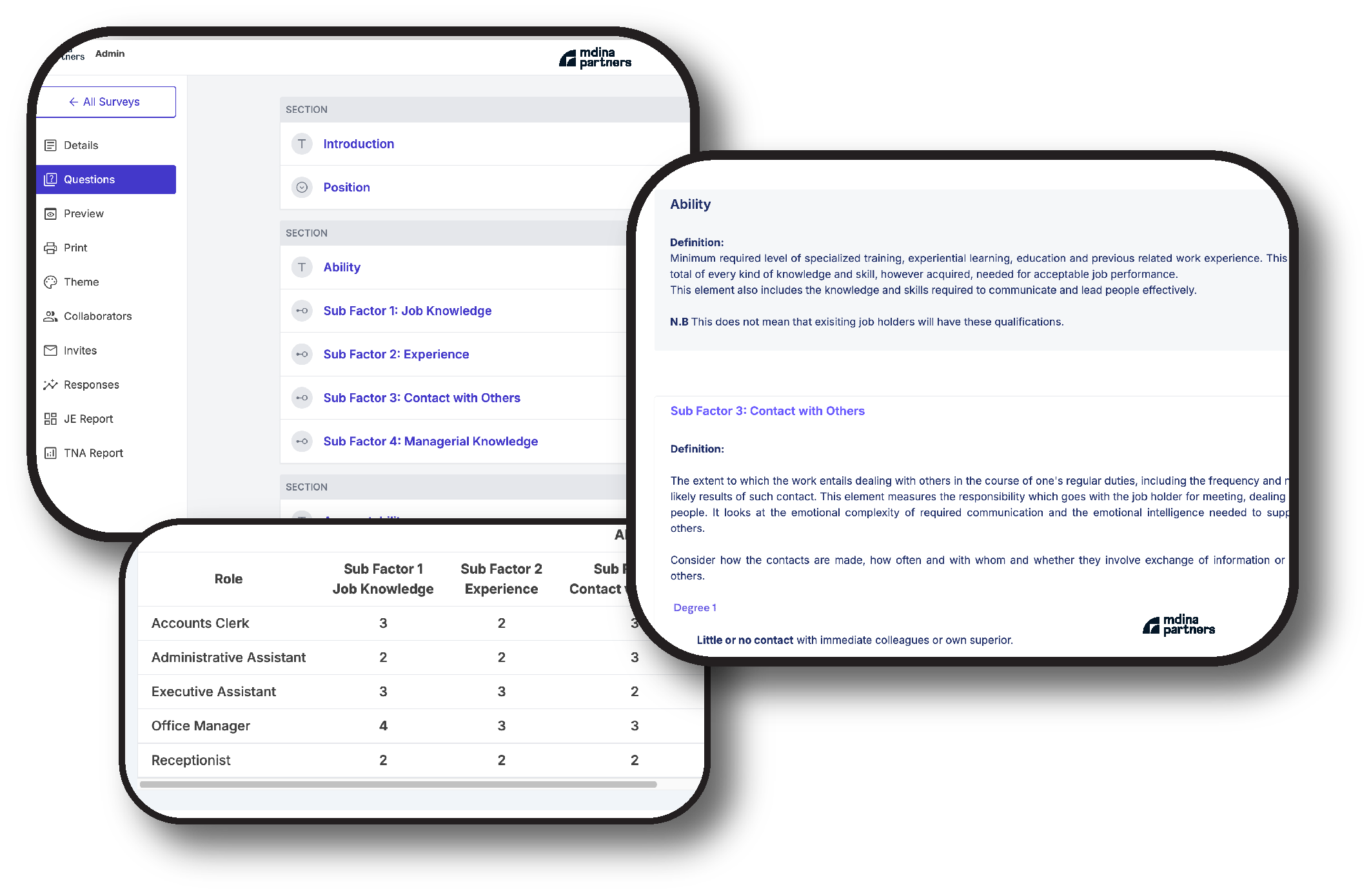
Roles are evaluated using a structured point-factor methodology.
Each role is assessed against objective factors such as:
- Knowledge and expertise
- Problem solving
- Decision-making responsibility
- Communication requirements
- Leadership and people impact
- Business contribution
Each factor is scored consistently using predefined evaluation criteria.
Step 3: Calibration & Quality Assurance
Once roles have been evaluated, results are reviewed and calibrated to ensure consistency across departments, functions, and job families.
This stage helps identify anomalies and ensures the methodology has been applied fairly throughout the organisation.
Step 4: Analysis & Reporting
Evaluation results are consolidated into detailed reports and dashboards that provide visibility across the organisation.
This allows leaders to explore data from multiple perspectives and identify trends that may require further review.
Step 5: Action Planning
The final stage focuses on translating insights into practical actions.
This may include pay structure reviews, grading frameworks, reward strategy discussions, role redesign, or broader workforce planning initiatives.